What should you do when someone gets injured at work?
Your first responsibility is their health, well-being and safety.
But it is not always obvious what you should do next.
We have written a short, practical article that explains what to do after a workplace injury and how to stay compliant while protecting your business from costly disputes or liability risks.
Read it below.
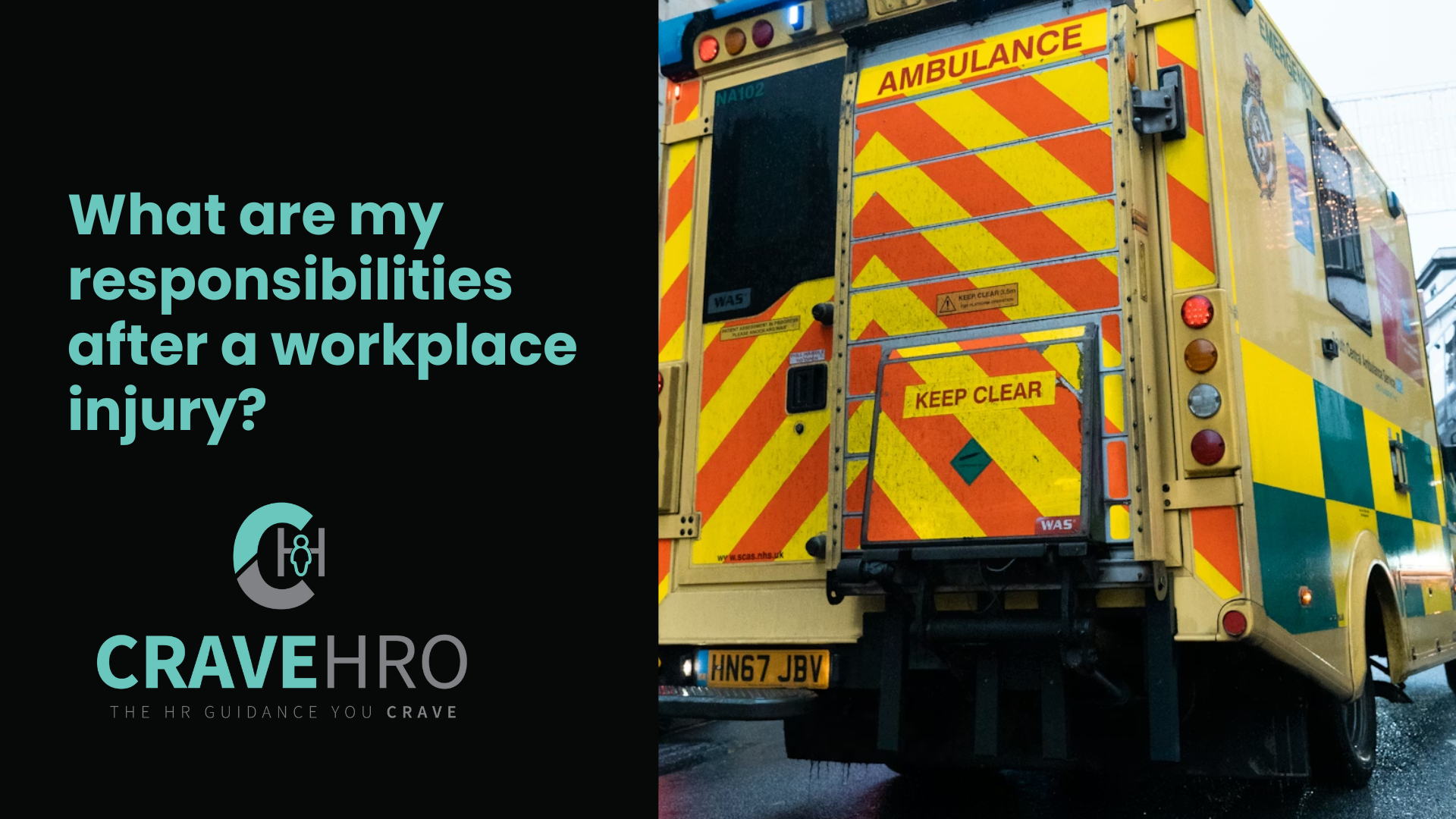
When an employee is injured at work, your first responsibility is their health, safety and getting them the help they need. But it is not always obvious what you should do next. This guide walks you through the steps that help you to stay compliant with federal safety expectations and protect your business from avoidable liability risks.
1. Make the situation safe Before anything else, make sure:
- The injured person receives first aid or medical care
- The area is safe for everyone else
- Anyone nearby knows what to avoid
If the injury is serious, call emergency services immediately.
2. Record what happened Create a clear written record that includes:
- The date, time and location
- What happened in plain language
- Who was involved
- Names of any witnesses
- Photos or evidence if useful
Accurate records help with internal reviews, workers’ compensation claims and preventing repeat incidents.
3. Check whether the incident needs to be reported to OSHA Some serious workplace injuries must be reported to the Occupational Safety and Health Administration (OSHA). Federal rules require reporting for:
- Fatalities
- Inpatient hospitalization
- Amputations
- Loss of an eye
If you are unsure as to whether an incident qualifies, check OSHA guidance or speak with an HR or safety professional.
4. Investigate what caused the incident Your goal is to understand what happened and why. Look at:
- The task being done
- Any equipment involved
- Training or instructions provided
- The work environment
- Whether normal procedures were followed
Keep this factual and fair. You are looking for the root cause, not someone to blame.
5. Support the injured employee Good support reduces stress and helps your employee to return to work safely. This may include:
- Staying in touch during recovery
- Adjusting duties temporarily
- Setting up a phased return
- Reviewing safety practices if changes are needed
Many small businesses skip this step, but it makes a big difference to morale and recovery.
6. Learn from the incident and prevent future issues Once you understand what caused the injury, take action. This may involve:
- Updating safety procedures
- Improving training
- Repairing or replacing equipment
- Changing how a task is performed
- Reminding your team of safe working practices
Communicate any changes clearly and consistently.
7. Keep your documentation up to date You may need to update:
- Your incident report
- Safety procedures
- Training records
- Equipment or maintenance logs
- Any internal documentation related to the injury
Good documentation helps you to stay organized and protects your business if questions arise later. Get support if you need it Workplace injuries are stressful and every situation is different.
If you want to make sure that you are handling an incident correctly, or you want help with strengthening your safety processes, get in touch. We can guide you step by step and help you to protect both your people and your business.